Moving & Handling People
Agreed ways of working, giving a helping hand, dignity and respect, care plans, the step-by-step procedures for assisting people to move, dealing with falls, and bariatric and hoist skills.
What this part covers
- Moving people vs moving objects
- Organisational policies and giving a helping hand
- Checking your environment and respecting dignity
- Equipment for moving people
- Care plans: creating and updating
- Assisting people to move (step-by-step)
- Dealing with falls
- Caring for bariatric people and hoist skills
Moving or handling a person is a genuinely different task from moving an object. People are often heavy — sometimes very heavy — and unlike a box, they move: their balance, grip and weight distribution can shift mid-task. They can be injured by incorrect handling, and they need confidence and encouragement while coping with their own reduced ability to move unaided.
Agreed ways of working
This means following the person's care plan and sticking to whatever moving and assisting procedures it specifies. If a care plan states someone only needs support from a care worker or nurse — no hoist, no extra equipment — that's what should happen, and nothing more or less.
Risk assessment: adding LAD to TILE(O)
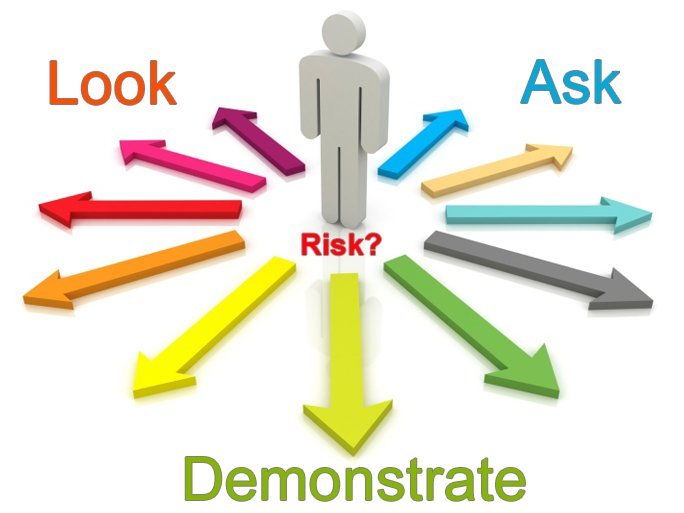
TILE(O) still applies, but moving a person also requires assessing their degree of mobility, so the handler applies Look, Ask, Demonstrate ("LAD") on top of it.
- Look — does the person have head control in their current position (essential for every other movement)? Do they have trunk control, which tells you whether they can assist? Are there differences between the two sides of their body that might affect what movements they can perform? If sitting, do their feet touch the floor? If lying down, how tall are they, and what's their weight?
- Ask — how far can they walk, and how comfortable is that for them? What help do they normally need? How well they respond tells you something about both their understanding and their capability.
- Demonstrate — asking them to show you what movement they can manage adds real substance to your assessment.
A formal risk assessment should be carried out by an occupational therapist or someone similarly qualified, and typically covers an entire home or care setting. An informal assessment — the kind a carer performs on the spot when suddenly needing to help someone — tends to focus on just the immediate environment.
Always comply with your organisation's own policies and guidance on lifting and moving people — some organisations ban specific lifting techniques outright. As a general rule, avoid lifting people (children or adults) unless the lifters have had practical training in the right techniques and equipment, and any operation involving a team should be fully discussed among everyone involved beforehand — a nurse transferring a patient, for instance, should check with the relevant physician that the transfer won't cause injury.
Unless instructed otherwise, you may still need to help someone get in or out of bed, turn over or sit up, bathe or shower, use the toilet, sit or stand, walk, get in or out of a vehicle, or get up from the floor after a fall — each of these has its own evidence-based technique, covered in detail in "The Guide to the Handling of People – a Systems Approach," published by Backcare.
Giving a helping hand
Often a person can move independently but just needs encouragement, or a "helping hand" — providing the minimum force needed so most of their weight stays on the surface they're already on (floor, bed, chair). Before doing this, check: are you fit and strong enough to help? Wearing suitable clothing and shoes? Is help available if needed? How long will it take, and is there clear space? Have you told the person you're going to help, and do they understand and agree? Have they indicated how much they want to do themselves?
- Never lift above shoulder height
- Keep your feet stable, take a firm hold, and keep any weight close to your body
- Keep your back straight, bend your knees, and lift as smoothly as possible
- Give plenty of encouragement throughout
Incorrect handling can cut or bruise fragile skin, impede breathing, or injure the shoulder or neck — if working with a colleague, agree beforehand exactly how you'll carry out the move, and be clear on who's in charge.
The environment around a service user is rarely ideal for manual handling — chairs, tables, doors, wet floors, trailing wires and low furniture can all get in the way. Before moving someone, look around: clear any obstacles roughly 2 metres away (or as needed), and note and remove any trip hazards.
Communicating clearly with the service user beforehand matters enormously — someone who understands what's happening makes the whole operation faster, safer and calmer, while a scared or uncooperative person can slow things down and increase the risk of injury to everyone involved. If more than one person is helping, make sure every team member understands their role and the risks involved; note that two people can't simply lift double what one person can — guidelines suggest only 20% more weight between two people, 30% for three, and so on.
If a moving and handling operation goes against the patient's own wishes, you (and your team, and your manager) need to consider: is the operation actually necessary? Would skipping it infringe their human rights? Is the patient of sound mind and able to make this decision? Are there alternative approaches that haven't yet been discussed? Your manager or supervisor, who knows the patient's file, is the right first point of call — beyond that, a manual handling specialist or HR can help if you're worried about breaking the law.
Respect and dignity
Respect is regard for someone's feelings and rights; dignity is the quality of being worthy of respect; privacy is freedom from unwanted intrusion. In practice this means: preserving privacy wherever possible, using sensitive language to explain and encourage necessary tasks, applying the Equality Act 2010's protections around age, disability, marriage and civil partnership, pregnancy and maternity, race, religion, gender, gender reassignment and sexual orientation, closing doors and windows or using a screen, explaining what's happening and asking if the person agrees, showing them any equipment involved, helping them into a comfortable position with clothing covering them during transport, and only opening doors or screens again once the move is complete.
- Slide sheets — moving someone closer to the top of a bed, or onto a surface of the same height, while they're lying down.
- Slings and hoists — for longer-distance moves, transfers between heights, or where there's a serious injury or leg disability.
- Transfer boards — moving between beds and wheelchairs, wheelchairs and toilets, or other seated positions.
- Turntables — helping someone turn while seated, such as getting in and out of a car.
- Handling belts — for weight-bearing patients needing some help to stand. These must never be used for lifting.
- Lifting cushions — supporting someone who has fallen to stand again.
Throughout, watch the person carefully: are they comfortable, free of pain, and not reacting badly to the assistance? If a task feels likely to harm you or the patient, stop immediately and ask for help — pushing on beyond your own ability risks harm to both of you.
Service users must always be part of the conversation about their own care plan, both when it's created and whenever it's updated. If they feel a decision is unfair or unreasonable — being asked to use a hoist they find demeaning, for example — they have every right to object, and a care plan can be tailored to their wishes within reason. Provided it's medically sound, there's no reason a care plan shouldn't simply be followed. Whenever you assist someone, talk them through exactly what you're about to do, to keep them reassured throughout.
Being flexible matters too: any change in the service user or their environment needs to be reflected in the care plan. If someone whose plan says they "cannot weight-bear" is now consistently able to support themselves, that needs recording. If a service user moves home or ward, the challenges they face will likely change, and the risk assessment and care plan need updating to match — many care plans now include update sheets specifically for this. Any changes must be written legibly with clear, factual information, a date and a signature — this is a legal requirement, not just good practice.
Where it's safe to do so, walking independently benefits a patient hugely — more control over their own bathroom breaks, better cardiovascular and lung health, and better odds of regaining the balance needed for eventual discharge, or simply staying in their own home. Where independent walking isn't possible, many patients will need assistance instead.
Whatever the specific manoeuvre, keep in mind your own centre of gravity (inside the pelvis — control your hip movement to avoid losing balance) and your body's key movement points: head, shoulders, hips and knees.
Moving someone forward in a chair
- Kneel in front of the person with one leg raised (half-kneeling) for a stable base
- Place an open hand on the hip opposite the buttock they're leaning on, and rest your other hand at their knee
- Check they're comfortable, and explain clearly: "When I say shuffle, lean forward and to one side. Shuffle forward by lifting your hip and thigh and bring your knee forward."
- On "shuffle," ease their hip across and towards the front of the chair, letting the thigh move forward
- Transfer your own weight back as they do this, so you're moving with your whole body rather than pulling with your arms
- Repeat with the other leg
Moving someone backward in a chair
- Kneel in front of the person, one leg raised for a stable base
- Place an open hand on the opposite hip, and rest your other hand at their knee
- Explain clearly: "When I say shuffle back, lift your hip and thigh and take your knee back."
- On "shuffle back," push gently at the knee to ease the leg backwards as the hip lifts
- Transfer your weight forward as this happens, and repeat with the other leg
Helping someone stand up (sitting to standing)
- Stand beside the person, facing the direction of movement, and adopt a stable base
- Flex your hips and knees to a lower position
- Place your inside hand on their back as a touch prompt to stand (centrally at shoulder level or lower, whichever helps) — this must stay a prompt, never a push, or you'll send them forward instead of up
- Support with your outer hand at their shoulder, or a palm-to-palm hold
- Move together — forward first, then upward — and stabilise by shifting your weight from your back foot to your front foot
Helping someone sit down (standing to sitting)
- The person should be standing in front of the chair or at the side of the bed, backs of their legs touching the sitting surface
- Stand at their weaker side
- Ask them to look at the seat, then down at their feet
- Give a clear instruction: "When I say ready and sit, reach down to the seat or chair arms and stick your bottom out" (this keeps them seated well back on the chair or bed)
- Say clearly, "Ready, and sit" — on "sit," they lean forward and push their bottom back into the chair, while you step in the same direction as them
Assisted walking
- Explain the process to the person first
- If they're known to fall, use their existing risk assessment to help prevent it happening again
- If they use a walking aid, make sure it's ready and they're holding it before stepping off
- Adopt a stable base — feet slightly apart, outer foot ahead, ready to step together
- Say clearly, "Are you ready, and walk," without impeding their natural movement or their aid
- Offer a flat, upturned hand for them to rest their palm on, joined hands no higher than hip height, staying close (usually slightly behind, hip near or touching their pelvis)
- Movement begins as their centre of gravity shifts, taking weight through one leg as they step forward with the other
Falls carry real risk in a healthcare setting, especially for elderly patients — broken bones and dislocated joints are genuine concerns. Prevention matters most: encourage the person to ask for help, use non-skid footwear, provide a locked-wheel armchair at the bedside, keep routes to the bathroom clear and well-lit, place aids like walkers and canes within reach, raise bed rails appropriately, evaluate chair and bed height, account for medications affecting consciousness or gait, check the environment for hazards, and keep at-risk patients from being left unattended. Everything you do should stay within the person's care plan — especially where fall risk is concerned.
There's no single rule for exactly when to step in and assist a falling person — this is usually a judgement shaped by organisational policy and your own read of the situation. There are three recognised ways to assist someone who is falling.
Lowering
- Move behind the patient and form a stable base — one foot in front of the other, front knee bent more than the back
- Grasp them with open hands near the hips
- Allow them to slide down your front leg until safely lowered to the floor, avoiding flexing your own back
- You should end up kneeling behind them, with the fall safely absorbed
Redirecting
If a patient can fully weight-bear, redirecting the fall is often the safest option for both of you: release contact to let them fall naturally, but if they're heading somewhere dangerous, lightly push them toward a safer direction, and clear any obstacles from their path.
Redirecting on stairs
This only applies if the patient can at least partially bear their own weight. If you're behind them, use your own body weight to gently push them towards the bannister or wall; as they slide down it, place your leg behind them, ready to take their weight as they slide down your leg.
A bariatric person is generally someone weighing 25 stone or more, or with a BMI over 40 kg/m². An estimated one million people in the UK meet the criteria for bariatric surgery, and many have mobility problems as a result. In 2019, 29% of UK adults were classed as obese, along with 20% of Year 6 children — figures that make specialist bariatric equipment and properly trained handling technique genuinely essential, not optional, for many services.
Hoist skills: transferring someone from a bed
- Insert the sling — roll the person side to side, keeping the sling's bottom edge in line with the base of their spine, centred behind them. Roll and tuck the lower half of the sling under them, then roll them onto the folded sling and gently pull the remaining material through. They're often more comfortable helped into a seated position within the sling.
- Set up the sling — position the leg pieces from outside to inside, pulling the hooks between the legs to attach to the hoist. Position the hoist under the bed with legs open and locked (wheel brakes must not be applied), lower it until close enough to attach the sling, then attach each side evenly to the lift bar.
- Transfer the patient — raise the lift until their buttocks clear the mattress slightly, turn them gently so their feet dangle over the bed's side, then steer slowly to the wheelchair or destination. Lower them down and remove the sling immediately afterwards — leaving it on risks discomfort or injury.